In the era of rapid advancement in healthcare informatization, medical data—being the core asset for hospital operations and critical information that directly affects patients’ lives and health—has its accuracy, completeness, and security directly determining the quality and efficiency of healthcare services. However, with the explosive growth in data volume, ensuring foolproof integrity during hard drive copying and data migration has become a major challenge facing the healthcare industry. CRC verification and bit-by-bit comparison technology are precisely the key to overcoming this challenge.
1. Special requirements for medical data copying
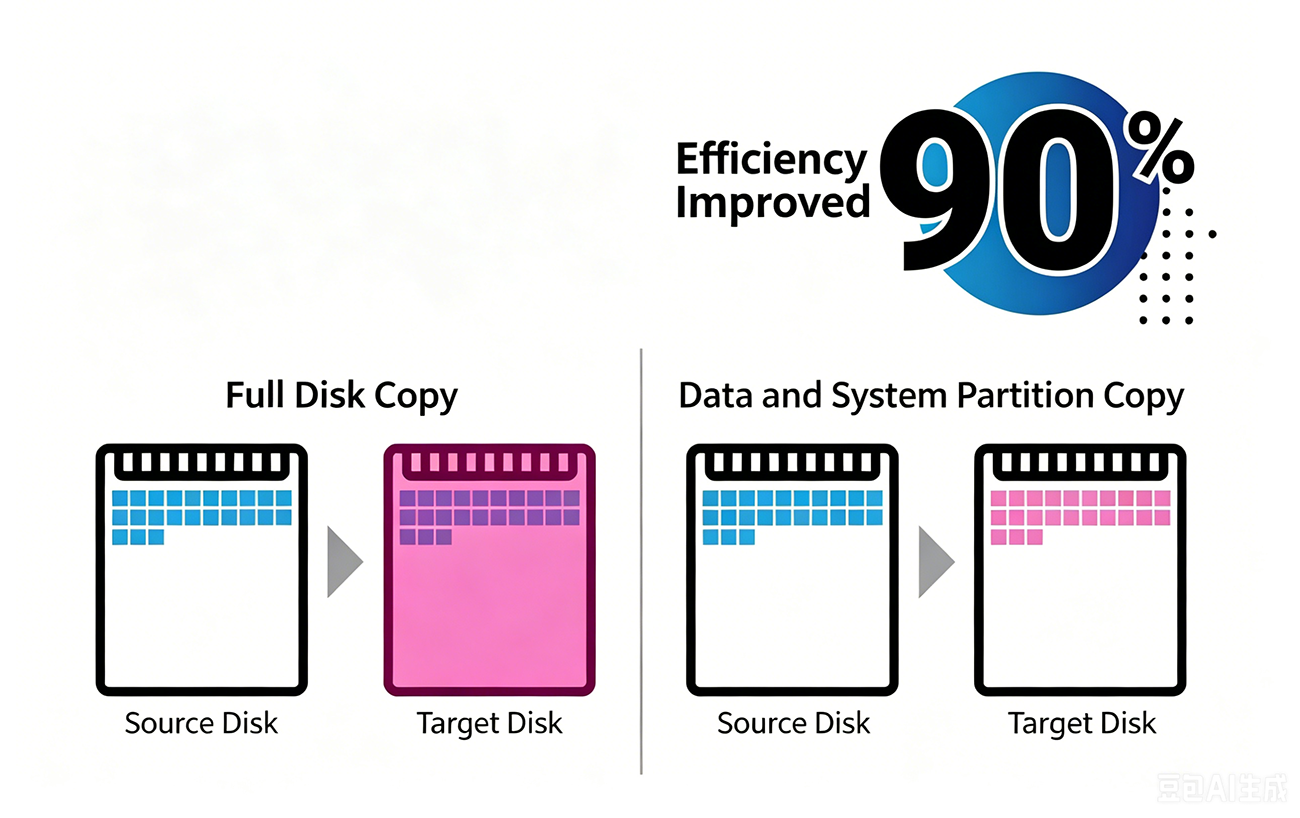
Medical data is highly sensitive, highly valuable, and tamper-proof. Traditional file-level copying methods merely replicate the contents of files, ignoring the underlying data structures. As a result, such methods are prone to data loss, corruption, or silent errors caused by factors like network fluctuations, hardware compatibility issues, or aging storage media. These “invisible” data defects can have catastrophic consequences for medical imaging requiring precise diagnoses or electronic health records that document critical patient conditions. Therefore, hard-drive copying in the healthcare industry must strive for the utmost precision—achieving an exact "reproduction of the original disk."
2. Dual technology, jointly building a defense line for medical data security.
UReach’s copier’s dual-verification mechanism is not merely a simple addition of features; rather, it’s a hierarchical strategy that balances efficiency with diagnostic depth.
2.1 CRC Check: CRC Check—An Efficient “Digital Fingerprint” Screening
The Cyclic Redundancy Check (CRC) is a widely used error-detection algorithm in the fields of data communication and storage. In UReach’s copying machine verification system, CRC plays the role of an “efficient initial screening.” During routine data replication tasks in medical applications, the system first uses CRC verification (Cyclic Redundancy Check) to quickly confirm the overall integrity of the data. CRC verification is based on the principle of polynomial division: by performing modulo-2 division on the source data block, it generates a fixed-length checksum—a “digital fingerprint.” After the data is copied to the target storage medium, the system re-applies the same CRC algorithm to the target data and compares the newly generated checksum with the original checksum. If the two match exactly, it confirms that no bit-level errors occurred during transmission. However, if any discrepancy arises—even a single-bit flip—the CRC verification mechanism immediately triggers an alert, indicating that the data may be corrupted or tampered with.
The advantage of this verification method lies in its efficiency—it can complete integrity checks on massive amounts of medical data (such as TB-level medical imaging databases and electronic health record databases) in an extremely short time, easily meeting the requirements for detecting 99.9% of transmission errors. In daily data backup and hard drive cloning scenarios within the healthcare industry, CRC verification
The verification process acts like a “rapid screening network,” ensuring basic data security while significantly boosting production-line operational efficiency and avoiding time waste caused by full-data comparisons.
2.2 Bit-by-Bit Comparison: Achieving a “Perfect Clone” of Data
If CRC checking ensures that the data “isn’t corrupted,” then bit-by-bit comparison ensures that the data “is completely intact.” When CRC checking detects an anomaly, or when a user performs a replication task with an extremely high security level—such as migrating the system disk of a hospital’s core server or performing offline backups of genomic sequencing data—the system will further activate the bit-by-bit (bit-for-bit) comparison mechanism. Bit-by-bit technology is a low-level data replication and verification method that operates on a per-bit basis. It does not rely on the file system or operating system; instead, it directly manipulates the physical sectors of the storage medium.
Specifically, the system reads and writes the contents of every track and every sector on the source disk— including data areas that have been deleted but not overwritten, file system metadata, bad-sector markings, and more—byte by byte. At the same time, it performs real-time bit-by-bit comparison between the source and target data. This “pixel-level” replication accuracy ensures that the target disk is physically identical to the source disk, achieving a true “original disk reproduction.”
In medical settings, the value of bit-by-bit comparison is particularly prominent:
·Handling Complex Data Environments: Medical data often comes in various formats—such as DICOM images, HL7 messages, and PDF medical records—and may contain special structures like hidden partitions or encrypted areas. Bit-by-Bit technology can fully replicate these “non-standard” data regions, ensuring no information is missed. ·Fault Localization and Repair: When bad sectors or write errors occur during the copying process, bit-by-bit comparison not only precisely locates the positions of faulty sectors (such as LBA addresses), but also leverages the hard drive’s SMART data to help technicians analyze the root causes of the failure (such as media aging or read/write head misalignment), providing crucial evidence for subsequent hard drive repair or data recovery efforts.
· Compliance Assurance: In the healthcare industry, data replication must comply with regulatory requirements such as HIPAA (Health Insurance Portability and Accountability Act) and GDPR (General Data Protection Regulation). The detailed validation report generated through bit-by-bit comparison—including comparison results for each sector, error types, and repair recommendations—can serve as legally admissible evidence of data integrity, meeting audit and compliance needs.
The “dual-verification” mechanism—combining CRC checksum verification with bit-by-bit comparison—ensures that the medical data replication process not only maintains efficiency (thanks to the rapid screening provided by CRC) but also achieves unparalleled accuracy (through precise, bit-by-bit diagnosis). This provides reliable technical support for critical business operations such as hospital information system migration, scientific research data backup, and disaster recovery.
1. Medical-grade hard drive cloning device: Ensures data security with ultimate verification.
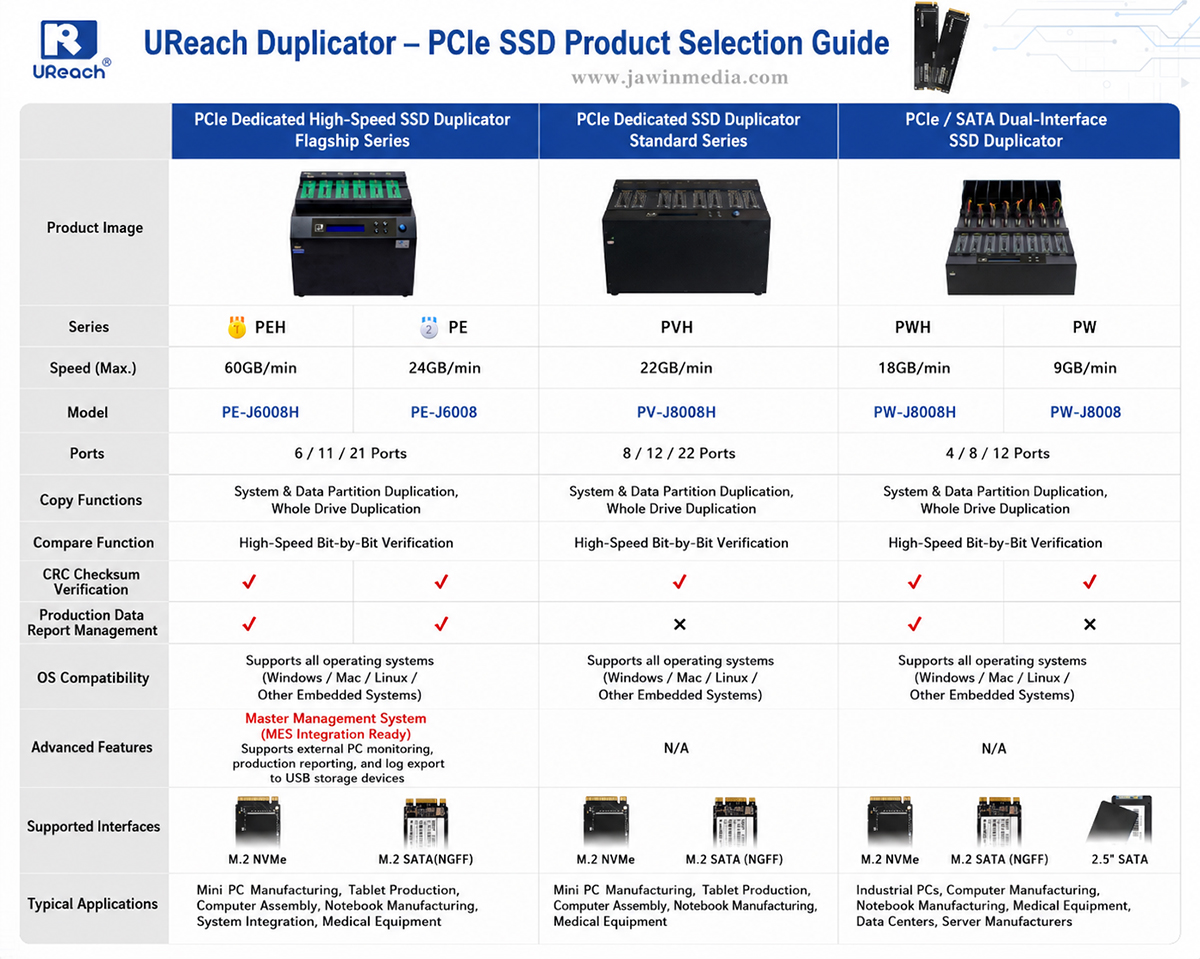
In the healthcare industry, data copying devices are not only efficiency tools but also the last line of defense for data security. Whether it’s high-speed NVMe, universal SATA, or portable SSD devices, their core value lies in their ability to provide reliable CRC checksums and bit-by-bit alignment comparison functions.
3.1 NVMe High-Speed Copy Device: Ensuring the Efficient Flow of Massive Data
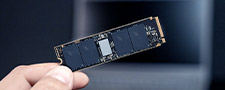
For TB-level big data such as PACS images and genetic sequencing data, this device significantly shortens the backup window by leveraging transmission speeds in the GB/s range. Its core function lies in “trading time for space”—by incorporating a built-in CRC checksum mechanism, it ensures zero data loss during high-speed replication, thereby meeting hospitals’ stringent requirements for timely and efficient migration and recovery of massive datasets.
3.2 SATA Universal Copy Tool: Ensuring Compliance and Security of Core Files
As the mainstay for data archiving and device replacement, this device focuses on ensuring absolute data consistency. Utilizing a low-level bit-by-bit cloning technology, it can fully replicate all information—including hidden partitions—leaving no room for data fragments that might be missed during file-level copying. Its core value lies in enabling “original disk reproduction” of electronic medical records and historical archives, fully meeting the healthcare industry’s stringent requirements for data integrity and compliance. 3.3 SSD/Mobile Devices: Reliable Migration of On-Site Data
In scenarios involving data migration for mobile ward rounds or emergency medical equipment, device stability is of paramount importance. Such devices employ CRC checksums to quickly verify the integrity of data packets, thereby preventing silent data errors caused by vibration or loose connections. Once a checksum anomaly is detected, the system immediately triggers an alarm, ensuring that every set of diagnostic data returned to the hospital is authentic and reliable.
Summary
Regardless of the hardware form factor, our devices always feature CRC checksum-based “efficient screening” and bit-by-bit comparison for “precise diagnosis” as standard configurations. By employing a dual-verification mechanism, we provide an unwavering guarantee of reliability for the storage, migration, and backup of medical data.