— How Storage Media Revolution Has Reshaped Duplication Equipment and Manufacturing Models
Over the past two decades, storage media has undergone a dramatic transformation—from mechanical HDDs to high-speed NVMe SSDs.
This evolution has not only delivered massive performance gains, but has also fundamentally reshaped data duplication technologies, duplicator architectures, and electronic manufacturing production lines.
This article provides a systematic review of the technological evolution from
HDD → SATA SSD → NVMe SSD, and examines how duplication technology has advanced alongside these changes.
1. The HDD Era: Mechanically Driven Data Duplication
Technical Characteristics
· Mechanical platters with read/write heads
· Interfaces: IDE / SATA
· Optimized for sequential access; extremely poor random performance
Duplication Method
· Sector-by-sector duplication
· Duplication speed limited by:
Spindle speed (5400 / 7200 RPM)
Head seek latency
· Typical speed: 3–8 GB/min
Production Line Impact
· Long duplication times
· Poor stability when duplicating multiple drives simultaneously
· Highly sensitive to vibration and environmental conditions
Role of the duplicator:
“Passive reading and basic copying”
2. The SATA SSD Era: The First Leap Enabled by Solid-State Storage
Technological Breakthroughs
· NAND flash replaces mechanical structures
· Unified SATA interface
· No seek latency, stable performance
Duplication Technology Advancements
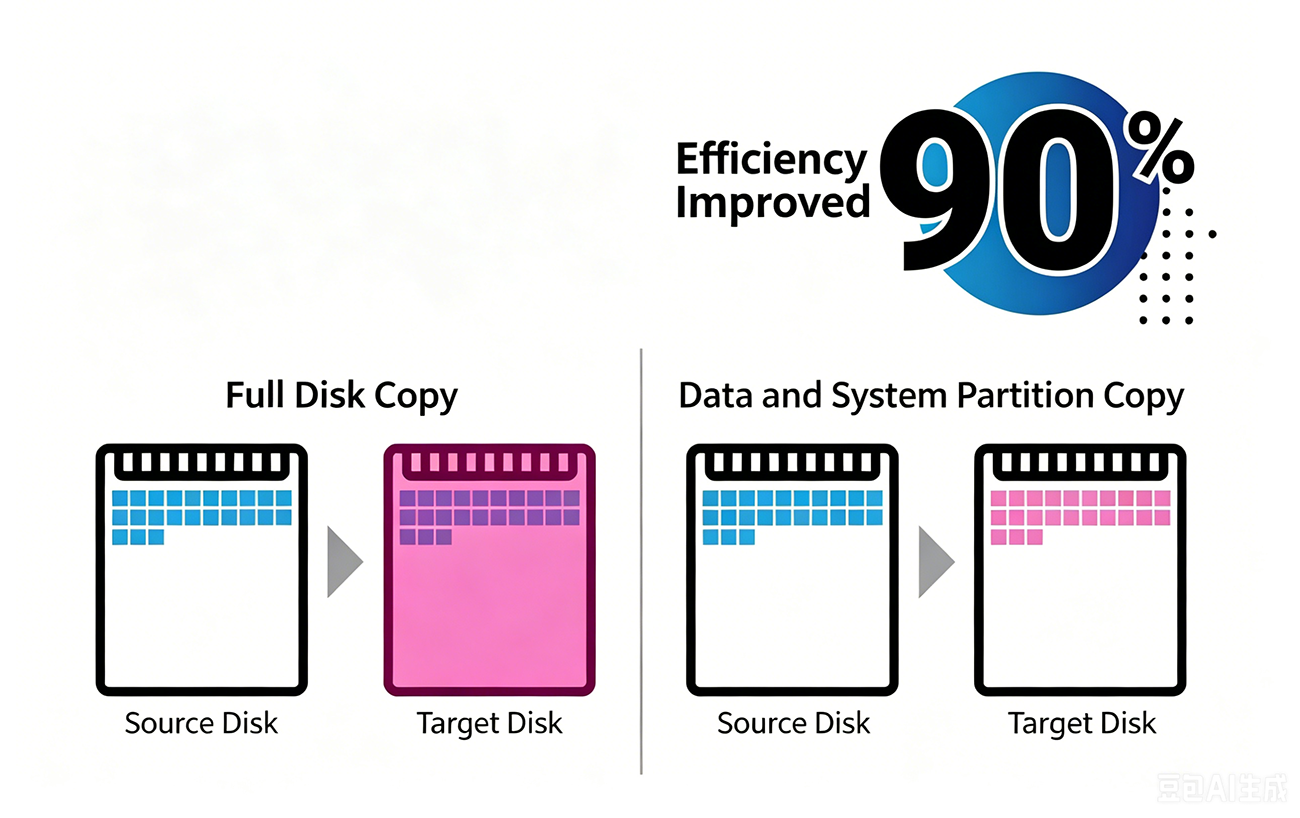
· Support for intelligent copy (copying only valid data)
· CRC verification becomes a standard feature
· Significantly improved stability in parallel duplication
Performance
· SATA theoretical bandwidth: 6 Gb/s
· Practical duplication speed: 12–20 GB/min
· Multi-slot duplication becomes viable
Production Line Transformation
· OS and system image pre-installation becomes mainstream
· OEM / ODM factories introduce automated duplication stations
Duplicator role evolves into:
“High-speed data duplication with basic data verification”
3. The NVMe SSD Era: PCIe Redefines Duplication Technology
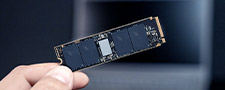
NVMe is not merely a faster SSD—it represents a fundamentally different storage protocol and system architecture.
The Fundamental Changes of NVMe
· Built on PCIe lanes instead of SATA
· Parallel queues (multi-queue, multi-command)
· Ultra-low latency and extremely high IOPS concurrency
Challenges to Duplication Technology
· Traditional SATA-based duplication architectures are no longer applicable
· Requires:
o PCIe Gen3 / Gen4 / Gen5 control
o Independent lane management
o Dynamic bandwidth allocation
· Data consistency becomes significantly more complex
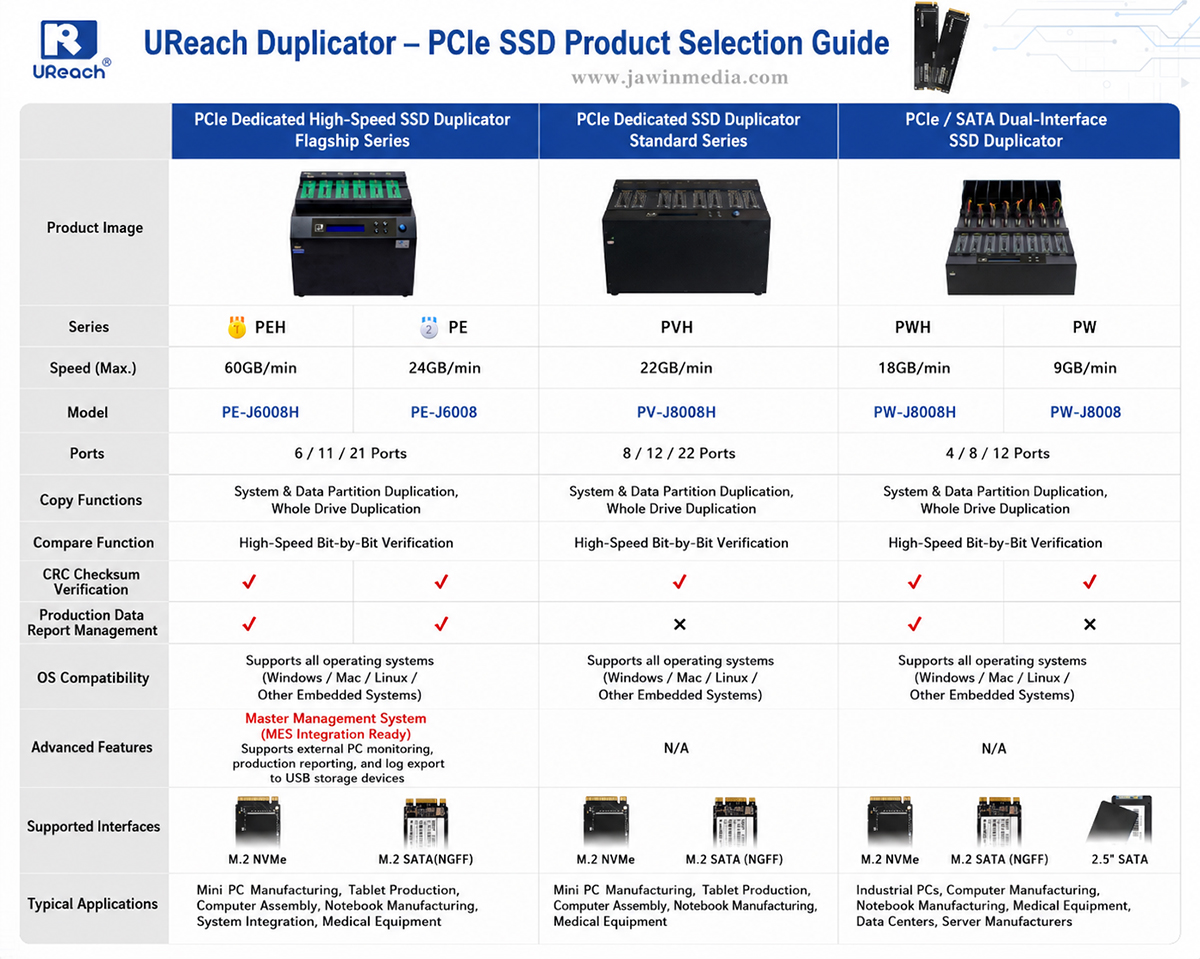
Features of Modern NVMe Duplication Technology
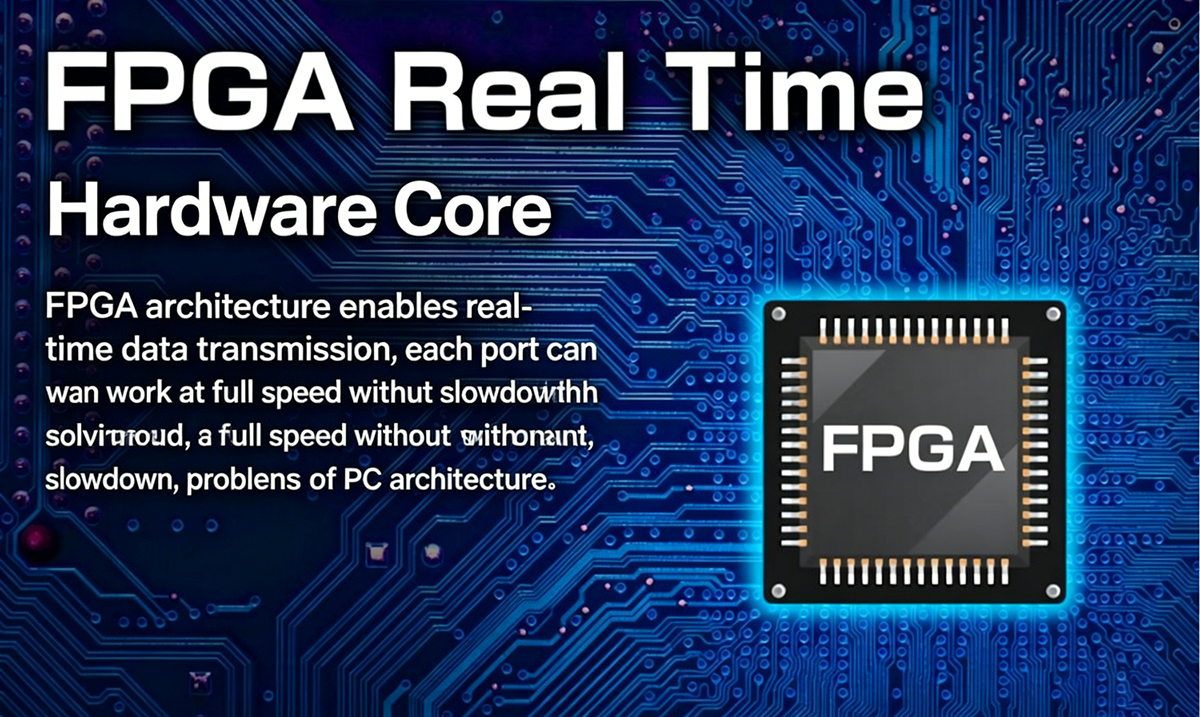
· True parallel duplication
· No speed degradation across multiple target drives
· CRC verification
· Duplication logs and production report generation
· Support for:
o M.2 NVMe
o M.2 SATA
o U.2
o SATA
Performance Metrics
· Single-drive duplication speed: 24–60 GB/min and above
· Designed for continuous, full-load industrial operation
Duplicators have evolved into:
Data Deployment Platforms
4. Summary: The Evolution of the Duplicator’s Role
|
Era
|
Storage Medium
|
Duplication Focus
|
Duplicator Positioning
|
|
HDD
|
Mechanical HDD
|
Stability
|
Basic copying device
|
|
SATA SSD
|
Flash storage
|
Speed + verification
|
Production duplication tool
|
|
NVMe SSD
|
PCIe flash
|
Parallelism + verification + automation
|
Data deployment platform
|
5. Future Trends: Duplication Is No Longer Just “Copying”
Ongoing Changes
· Duplication ≠ copying
· Duplication = an integral part of the production process
Key Directions Ahead
· Integration with automated production lines (MES / barcode systems)
· Remote logging and quality traceability
· Support for AI systems, industrial PCs, and edge-computing devices
· Next-generation interfaces such as Gen5 NVMe and CXL
Conclusion
From HDD to NVMe,
the transformation is not just about speed—it is about a complete shift in the data production paradigm.
In modern electronics manufacturing, duplication equipment has become the critical bridge connecting
storage technology × production efficiency × quality control.