In electronic manufacturing production lines, the selection of SATA and PCIE (including NVMe) duplicators directly determines system deployment efficiency, data security, and production line compatibility. There are significant differences in the technical characteristics of duplicators with different interfaces, so a comprehensive judgment must be made based on three core dimensions of the production line: capacity scale, hard disk type, and quality requirements. Based on the technical parameters and production line practices of mainstream brands such as Youhua and Jiemei, this article provides a full-process selection method of "requirement analysis - technical matching - scenario verification" to help enterprises accurately select suitable equipment.
I. Core Premise: Clarify the Four Basic Requirements of the Production Line
Before selection, it is necessary to sort out the core demands of the production line to avoid mismatching equipment with scenarios due to blind parameter comparison. Focus on clarifying the following four points:
1. Hard Disk Interface and Protocol: Lock the Basic Compatibility of the Duplicator
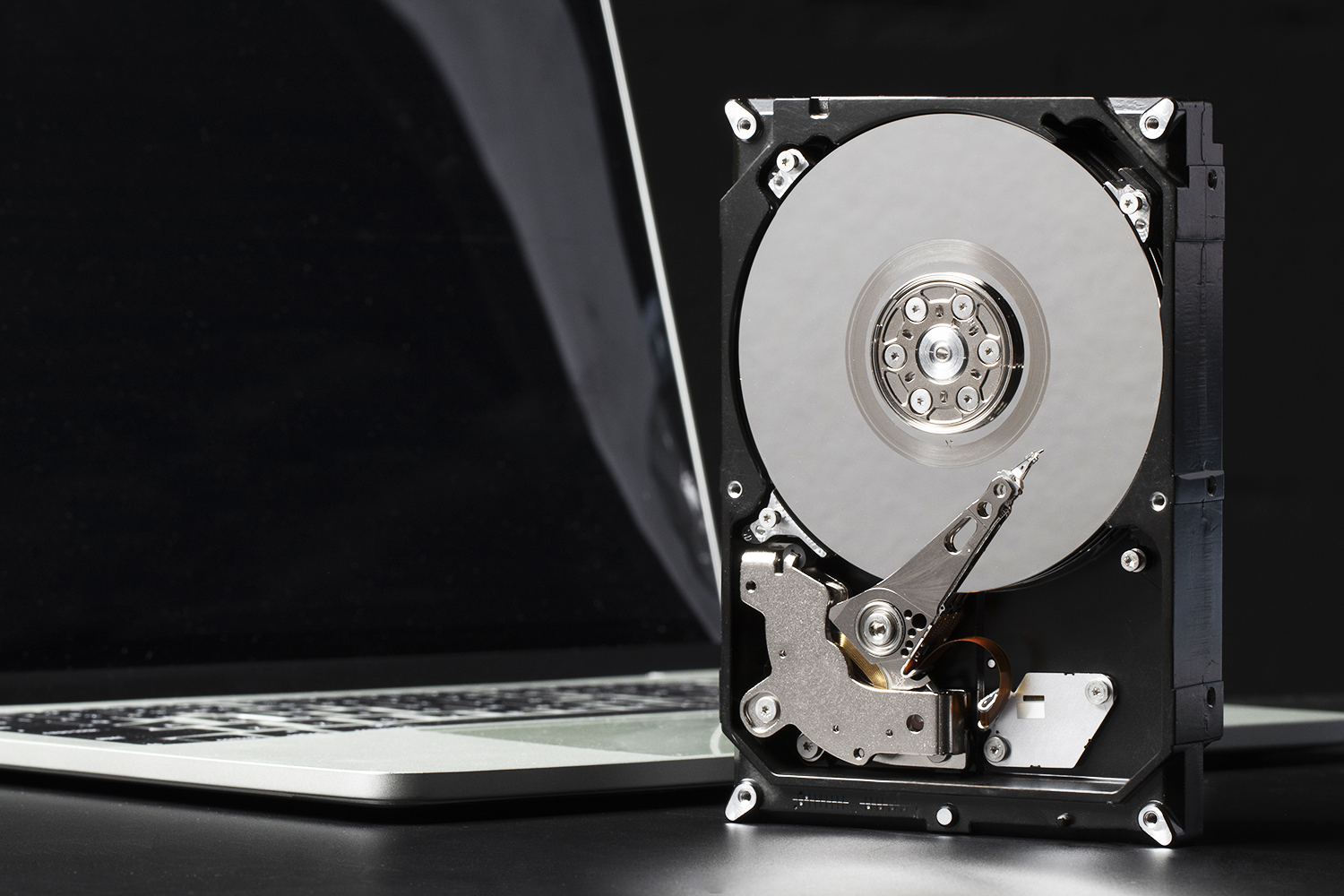
The type of hard disk used in the production line directly determines the interface selection of the duplicator. It is necessary to first confirm the physical interface and transmission protocol of the target hard disk, which is the "first threshold" for selection:
• SATA interface hard disks: Including 2.5-inch/3.5-inch SATA HDD and SATA SSD (such as Samsung 870 EVO), with SATA 3.0 transmission protocol. A duplicator supporting native SATA interface should be selected (such as Youhua MT series).
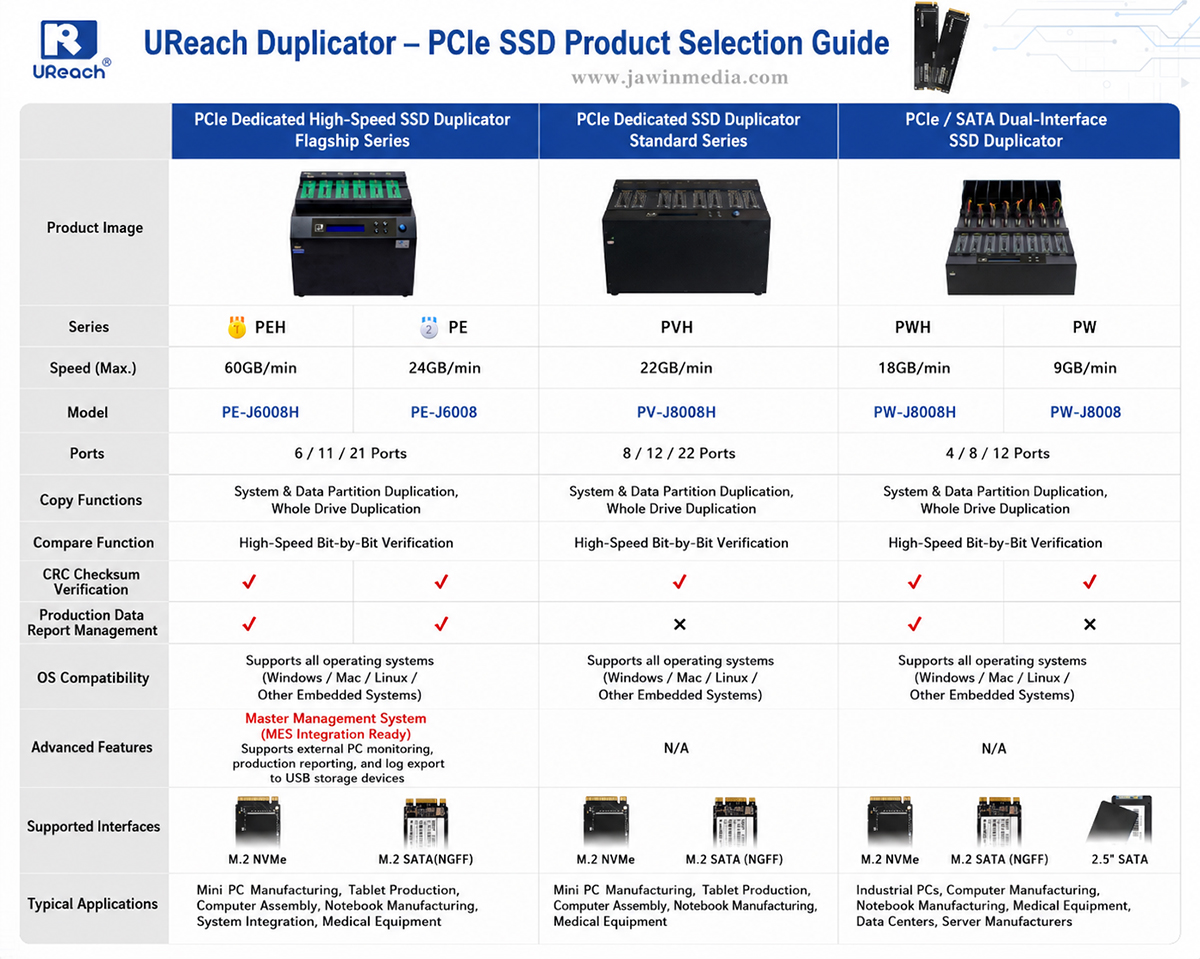
• PCIE interface hard disks: Mainly M.2 NVMe SSD (such as Samsung 990 Pro), with PCIe 3.0/4.0 (X4 channel) transmission protocol. A PCIE duplicator supporting NVMe protocol should be selected (such as Youhua PV-H series). Note to avoid "bridge-type" devices (bridging will cause speed loss and reduced compatibility).
• Mixed interface requirements: If the production line uses both SATA and NVMe hard disks (such as consumer electronics foundries producing low-end/high-end models simultaneously), a "dual-interface integrated" duplicator should be selected (such as Youhua PW series, which supports M.2 SATA/NVMe dual protocols and SATA interface with direct underlying signal output without bridging), avoiding cost waste and cumbersome production line switching caused by purchasing two devices.
Key reminder: Some old production lines may have hard disks with special interfaces such as IDE and mSATA, which can be adapted through the combination of "basic duplicator + adapter board" (such as Youhua SATA duplicator with IDE adapter board), eliminating the need to purchase separate dedicated equipment.
2. Capacity Scale: Match Efficiency Requirements by "Number of Channels" and "Speed"
Capacity determines the number of channels and actual copying speed of the duplicator. The required equipment specifications need to be calculated based on the "daily number of hard disks processed" and "single-batch copying volume":
• Small to medium capacity (100-500 pieces per day): Select 1-to-3/1-to-7 channel models, such as Youhua PV-J4008 (1-to-3) and PV-J8008H. A single device can meet small-to-medium batch production and occupies a small area (suitable for workshops with limited space).
• Large-scale capacity (500-2000 pieces per day): Select 1-to-11 channel models, such as Youhua PV-J12008H (1-to-11). Combined with "fast copy mode", it can achieve efficient parallel processing - taking a 30GB Windows system as an example, Youhua PV-J12008H can complete 440 hard disk copies per hour, fully meeting the "minute-level" delivery requirements of consumer electronics foundries.
• Ultra-large-scale capacity (more than 2000 pieces per day): Adopt a "host computer + duplicator" cluster architecture (such as Youhua PE series), and cooperate with MES system for task scheduling to avoid equipment idleness or capacity bottlenecks.
3. Data Security Requirements: Select by "Verification Mechanism" and "Traceability Function" at Different Levels
Production lines have different requirements for data integrity, so duplicators with different security functions should be selected accordingly. Focus on two core modules: "verification mechanism" and "production traceability":
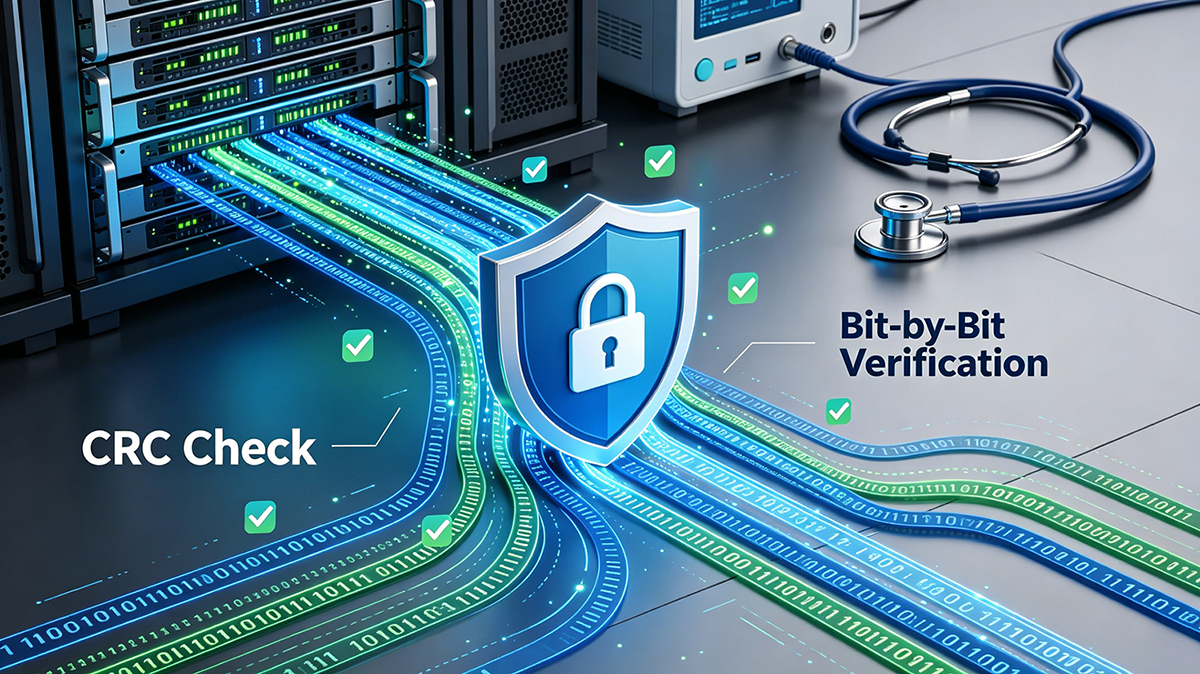
• Basic security requirements (such as deployment of ordinary office equipment): At least support CRC verification (such as CRC verification of Youhua PV-H series) to ensure that the copied data is consistent with the master disk, avoiding rework caused by "system damage found after installation".
• High security requirements (such as industrial computers and medical equipment): Need to support "CRC + bit-by-bit comparison dual verification" (such as Youhua PE series), and have production recording function - automatically record the serial number, copying time, and verification result of each hard disk (such as Youhua's LOG report), facilitating later quality traceability and complying with ISO 9001, GMP in the medical industry and other compliance requirements.
4. Operation and Maintenance Costs: Prioritize "Low Threshold + Easy Maintenance" Equipment
Operators in the production line have varying skill levels, and equipment maintenance efficiency directly affects downtime losses. Pay attention to the following two points:
• Operational convenience: Select "offline independent operation" equipment (no need to connect to a computer) with an intuitive LCD screen and one-key operation (such as the "fast copy" shortcut key of Youhua duplicators) to reduce training costs - ordinary operators can master basic operations in 10 minutes.
• Maintenance convenience: Prioritize the design of "independent interface replacement" (such as all interfaces of Youhua series can be plugged and replaced separately) to avoid the entire machine being shut down due to damage to a single interface; at the same time, confirm the manufacturer's local service capabilities and control the equipment failure response time within 10 hours.
II. Technical Parameter Comparison: Key Differences Between SATA and PCIE Duplicators
After clarifying the requirements, focus on core technical parameters to avoid being misled by "gimmick parameters" (such as the difference between "theoretical speed" and "actual speed"). The following is a comparison of key parameters and selection points of the two types of duplicators:
|
Comparison Dimension
|
SATA Duplicator (Take Youhua MT-J8008H as an Example)
|
PCIE Duplicator (Take Youhua PE-J6008 as an Example)
|
Selection Decision Basis
|
|
Core Interface
|
SATA 3.0, supporting 2.5/3.5-inch hard disks
|
PCIe 4.0 X4 + SATA 3.0 (dual protocol), supporting M.2 NVMe/SATA
|
Choose the former for SATA-only hard disks; choose the latter for NVMe interfaces
|
|
Actual Copy Speed
|
18GB/min (about 1 minute and 40 seconds for a 30GB system)
|
24GB/min (about 80 seconds for a 30GB system)
|
Choose the former for small to medium capacity of industrial computers; choose the latter for large-scale/high-speed requirements of laptop factories
|
|
Channel Number Range
|
1-to-7
|
1-to-5 - 1-to-20
|
Choose the former for daily output < 500 pieces; choose the latter or system deployment for > 500 pieces
|
|
Copy Modes
|
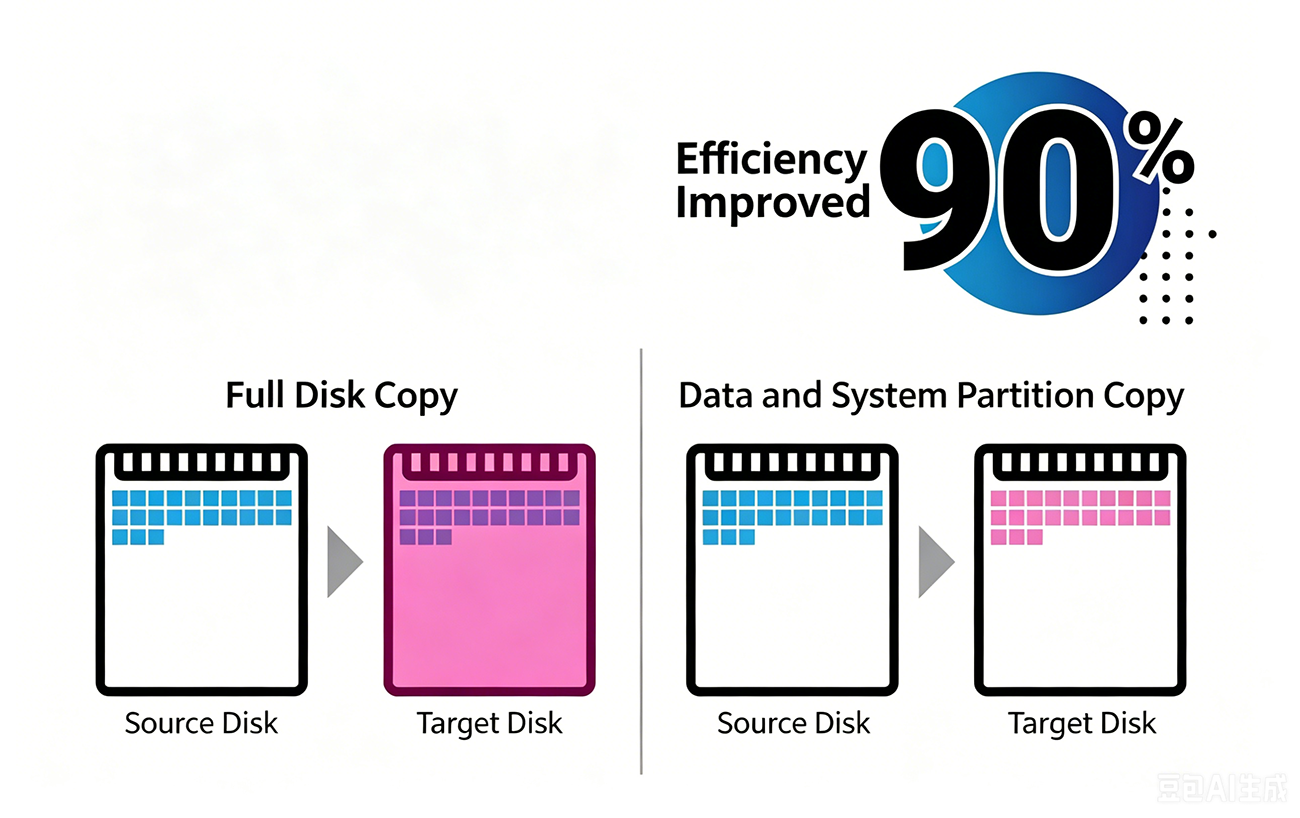
Fast copy, full-disk copy, effective partition copy
|
Fast copy, full-disk copy, percentage copy, network image copy
|
Choose the latter for network-downloaded master disks; both are applicable for conventional scenarios
|
|
Verification Mechanism
|
CRC64 + bit-by-bit comparison dual verification
|
CRC64 + bit-by-bit comparison dual verification
|
Same verification mode, matched by hard disk type
|
|
Compatible Systems
|
Windows, Linux, Mac
|
Supports domestic systems such as HarmonyOS, Pengpai, and UOS
|
Compatible with various system formats, matched by hard disk type
|
|
Typical Scenarios
|
Laptop foundries, production of ordinary industrial computers
|
High-end mobile phone/laptop foundries, data center deployment
|
Matched by product positioning and hard disk type
|
Key Parameter Interpretation: Avoid Three Major Selection Misunderstandings
• Speed: Focus on "actual copy speed" rather than "theoretical speed" The "theoretical speed" marked by manufacturers (such as 6Gbps of SATA 3.0 ≈ 750MB/s) is the interface limit. Actual copy speed is affected by hard disk read/write speed and data type - the actual speed of SATA duplicators is mostly 15-20GB/min, and that of PCIE duplicators is 20-60GB/min. During selection, refer to the "actual copy time of a 30GB system" (e.g., completing 10 copies within 10 minutes is qualified).
1. Compatibility: Prioritize "native protocol" over "bridging" Some low-cost PCIE duplicators adopt "SATA-to-PCIe bridge chips". Although they claim to support NVMe, they will cause more than 30% speed loss and are prone to compatibility issues (such as failure to recognize some brand NVMe hard disks). Choose devices with "direct underlying native signal output" (such as Youhua PV-H series), and confirm whether they support "NVMe AHCI dual-protocol native adaptation" through the manufacturer's technical documents.
2. Copy Modes: Select adaptive functions according to data types
3. Regular system deployment (no encrypted/hidden partitions): Choose devices supporting "fast copy" (only copy data sectors to save time).
○ Encrypted systems (such as BitLocker, LUKS) or special partitions (such as hidden boot sectors of industrial computers): Need to support "full-disk copy" (complete copy of all sectors without decryption).
○ Unified master disk management for multiple batches: Choose devices supporting "network image copy".
III. Scenario-Based Selection Cases: Optimal Solutions for Different Production Lines
Combined with actual production scenarios, the following are selection schemes for three typical production lines, covering requirements from small-to-medium capacity to large-scale manufacturing:
Case 1: Small-to-Medium-Scale Industrial Computer Production Line (300 SATA Hard Disks per Day)
○ Requirement characteristics: Only use SATA SSD, system image is about 25GB, require basic verification and simple traceability, and the workshop space is limited.
• Recommended selection: Youhua MT-J8008H (1-to-7 SATA duplicator).
• Core matching points: 18GB/min speed (about 1 minute and 25 seconds per 25GB system), 7-channel parallel processing can handle 500 pieces per day (meeting capacity requirements), supports CRC verification and basic LOG records, and is compact in size, suitable for workshops with limited space.
Case 2: Large-Scale Consumer Electronics Foundry (1500 Pieces per Day, Mixed SATA + NVMe)
• Requirement characteristics: Produce low-end (SATA) and high-end (NVMe) laptops simultaneously, system image is 30GB, require efficient parallel processing and full-process traceability, and connect to MES system.
• Recommended selection: Youhua PV-J22008H (1-to-21 dual-protocol duplicator).
• Core matching points: 22GB/min PCIe speed (37 seconds per 30GB system), 23-channel parallel processing can handle 460 pieces per hour (11,040 pieces per day, far exceeding requirements), supports SATA/NVMe dual interfaces, LOG reports are automatically synchronized to MES, meeting compliance requirements of major brands.
IV. Post-Selection Verification Steps: Ensure Equipment is Ready for Deployment
Before purchasing, verify the adaptability of the equipment to the production line through "small-batch testing" to avoid problems after large-scale procurement. It is recommended to implement the following three steps:
• Compatibility test: Connect 3-5 brands of hard disks commonly used in the production line (such as Samsung, Kingston, Western Digital) to the duplicator, test the recognition success rate (which needs to reach 100%), and verify the copy integrity of different systems (such as Windows 10 IoT, Linux).
2. Efficiency test: Simulate the actual production scenario, perform batch copying with 10 hard disks, record the total time-consuming and average speed per piece, and confirm whether it meets the capacity requirements (e.g., copying 10 hard disks with a 1-to-7 channel duplicator, the total time-consuming should be ≤ single-piece time × 2).
3. Stability test: Run at full load continuously for 72 hours (simulating three-shift production in the production line), record the equipment failure rate and verification failure rate (which need to be ≤ 0.3%), and test the equipment protection capability during power fluctuations (such as voltage dips common in Southeast Asia) (needing to support automatic power-off protection to avoid data loss).
V. Summary: Selection Decision Tree (Quickly Match Requirements with Equipment)
Finally, a simplified selection decision tree is provided to help quickly match requirements with equipment types:
1. Step 1: Confirm the hard disk type
1. SATA only → Select SATA duplicator (such as Youhua series);
2. Including NVMe or mixed interfaces → Select PCIE dual-protocol duplicator (such as Youhua PV series);
3. Step 2: Confirm the capacity scale
1. Daily output < 500 pieces → 1-to-3/1-to-7 channels;
○ Daily output ≥ 500 pieces → 1-to-11/1-to-23 channels;
○ Step 3: Confirm the security requirements
2. Ordinary scenarios → Basic CRC verification;
○ High-requirement scenarios → Dual verification + LOG traceability;
Through the above process, it can be ensured that the selected duplicator can not only match the current requirements of the production line but also reserve future expansion space (such as supporting interface upgrades and channel cascading), avoiding "one-time purchase waste". For further accurate selection, detailed information such as "hard disk brand and model, daily capacity, system type" of the production line can be provided to obtain a customized equipment configuration list and return on investment calculation.