In critical fields such as industrial automation, industrial computers serve as the core hardware ensuring stable equipment operation. The OS deployment of industrial computers directly determines production efficiency and the stability of end devices.
Traditional manual deployment methods are constrained by slow speed, high error rates, and weak compatibility, making them increasingly incompatible with the high-production-volume and high-quality requirements of modern industrial computer manufacturing facilities.
One of our partner enterprises specializes in the R&D and production of industrial automation equipment. Its core products are industrial computers for the automotive, banking, and communications sectors, with a daily production demand of 300 units. Before introducing the JMEGA cloner, the production line relied on the traditional method of deploying OSes one by one using USB boot drives, which gave rise to three core pain points:
1. Low Deployment Efficiency and Prominent Production Bottlenecks
The enterprise’s industrial computer system, including the Windows 10 OS, control software, and driver packages, has a total capacity of approximately 35GB. With the traditional USB installation method, deploying the system on a single industrial computer takes about 30 minutes. Even with 10 operators working simultaneously, the daily production capacity only reaches 200 units, falling short of the 300-unit target and prolonging the order delivery cycle.
2. High Error Rate in Manual Operations and Significant Increase in Rework Time and Costs
During manual operations on the production line, issues such as mismatched driver versions, missing software components, and interrupted data transmission are prone to occur. According to production line statistics, the defect rate of the traditional deployment method is as high as 7.5%. For each industrial computer requiring rework, the hard drive must be reformatted and the system reinstalled. The rework cost per unit (including labor and time) is approximately 300 yuan, resulting in monthly rework costs exceeding 30,000 yuan.
3. Poor Compatibility and Complex Production Processes for Multiple Models
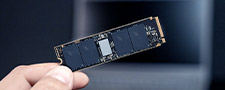
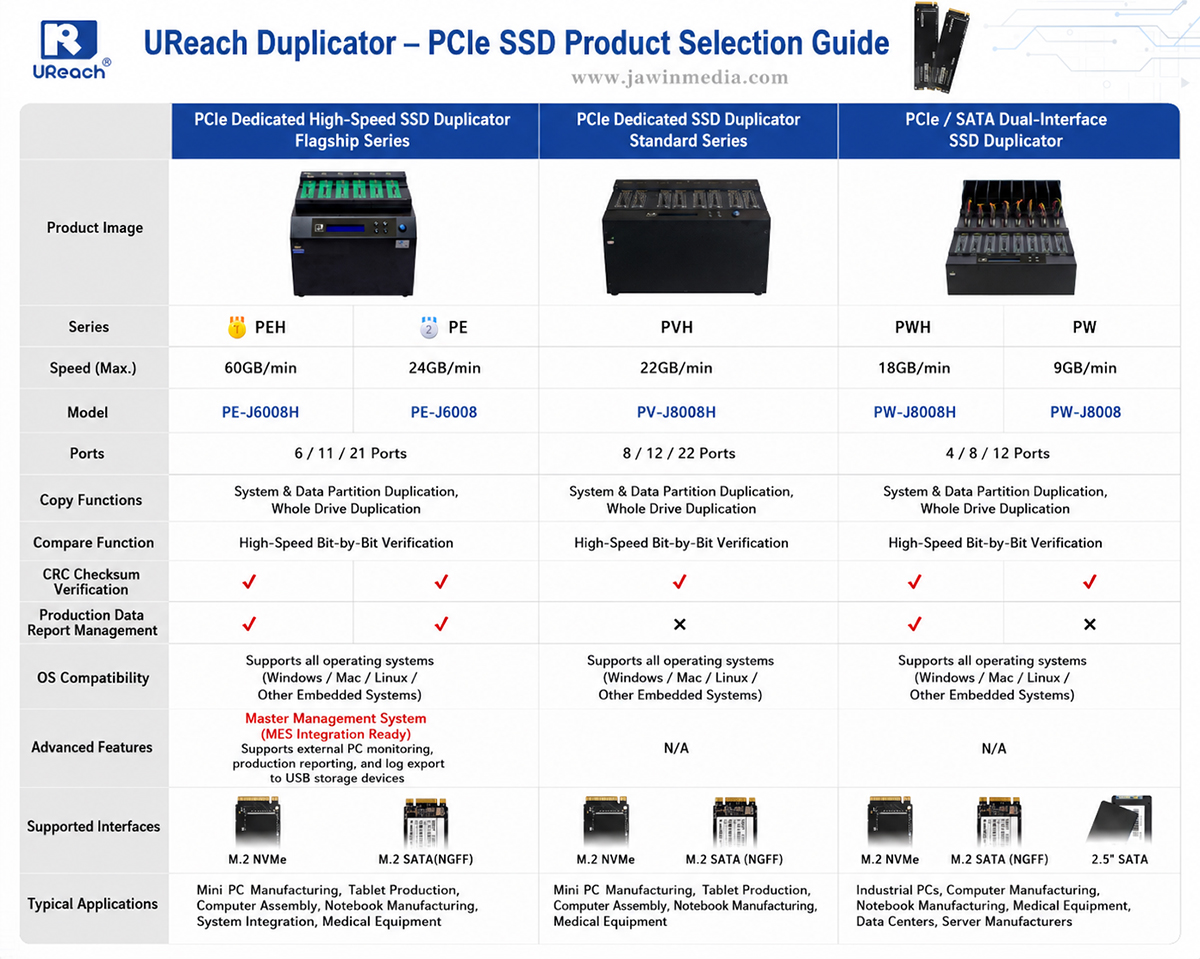
The enterprise’s industrial computer product line covers 2 series: high-end models adopt NVMe interface SSDs (for high-speed data processing), while entry-level models use NGFF form-factor hard drives (to fit miniaturized chassis). Traditional deployment tools only support a single interface, requiring the establishment of 2 independent deployment lines for different models. This not only occupies 60% of the workshop space but also increases the time cost of equipment switching.
Implementation Path of the JMEGA Cloner
1. Addressing the Above Pain Points
The JMEGA team, based on the enterprise’s needs and targeting the two protocol interfaces required for the customer’s production line, recommended the PS-X800 solution. A single device can support both NVMe and NGFF interfaces simultaneously, enabling standardized and efficient system deployment.
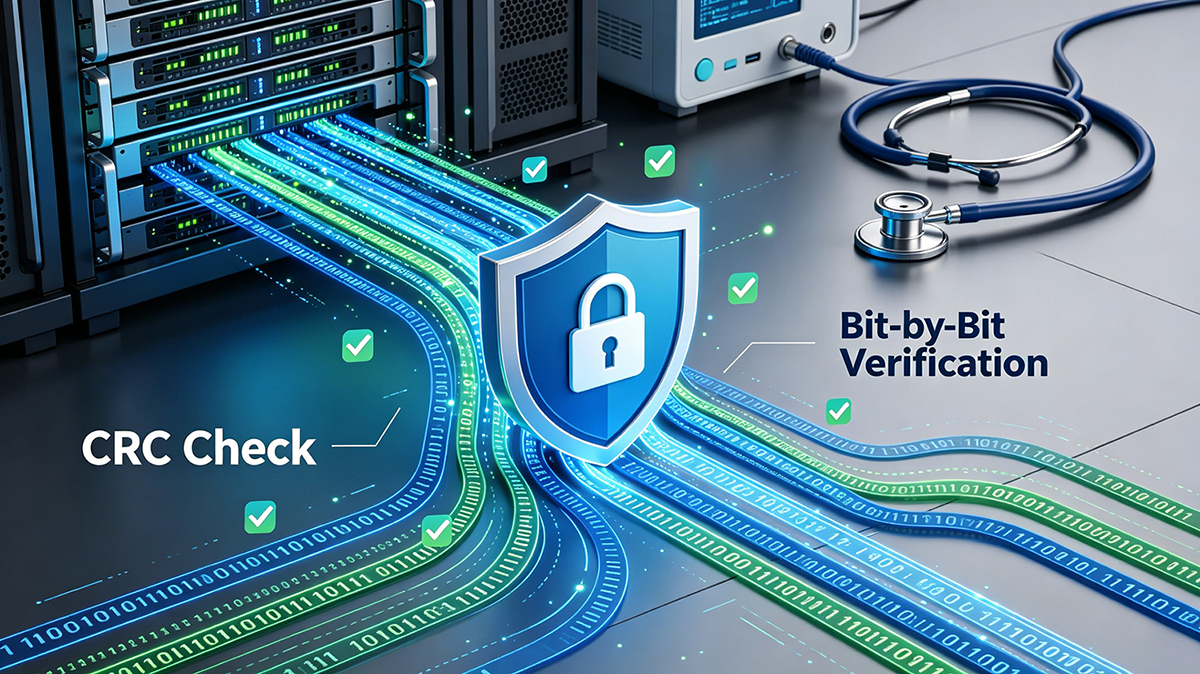
•Write the 35GB industrial computer system image (including the OS, control software, and driver packages) provided by the enterprise into NVMe and NGFF master drives. Use the CRC verification function of the JMEGA cloner to generate a unique verification code for the image, ensuring no data corruption or component loss in the master drives.
2. Practical Production Process
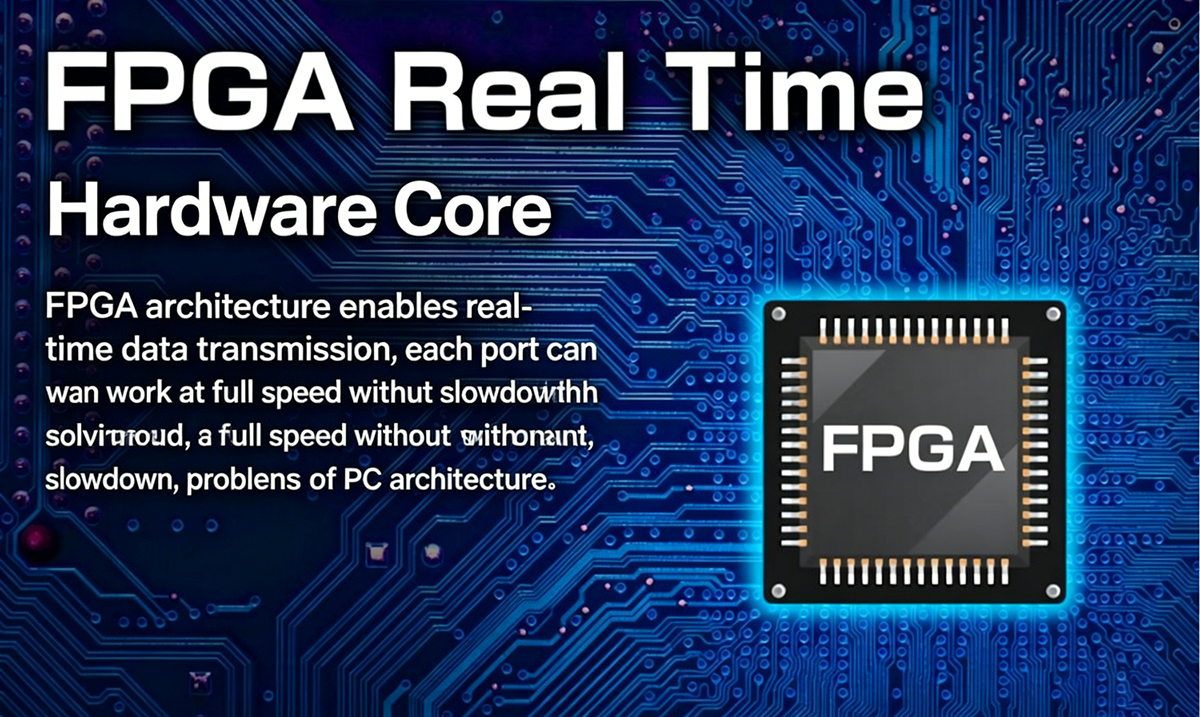
Through the design of parallel cloning and FPGA architecture, the JMEGA cloner achieves a qualitative leap in deployment efficiency. The specific process is as follows:
Step 1: Cloning Preparation
The operator connects the verified master drive to Port 1 (master source port) of the cloner, and simultaneously connects the hard drives of 7 industrial computers (selecting NVMe/NGFF interfaces based on the model) to the 7 target drive ports of the PF-X800.
Step 2: One-Click Launch of High-Speed Cloning
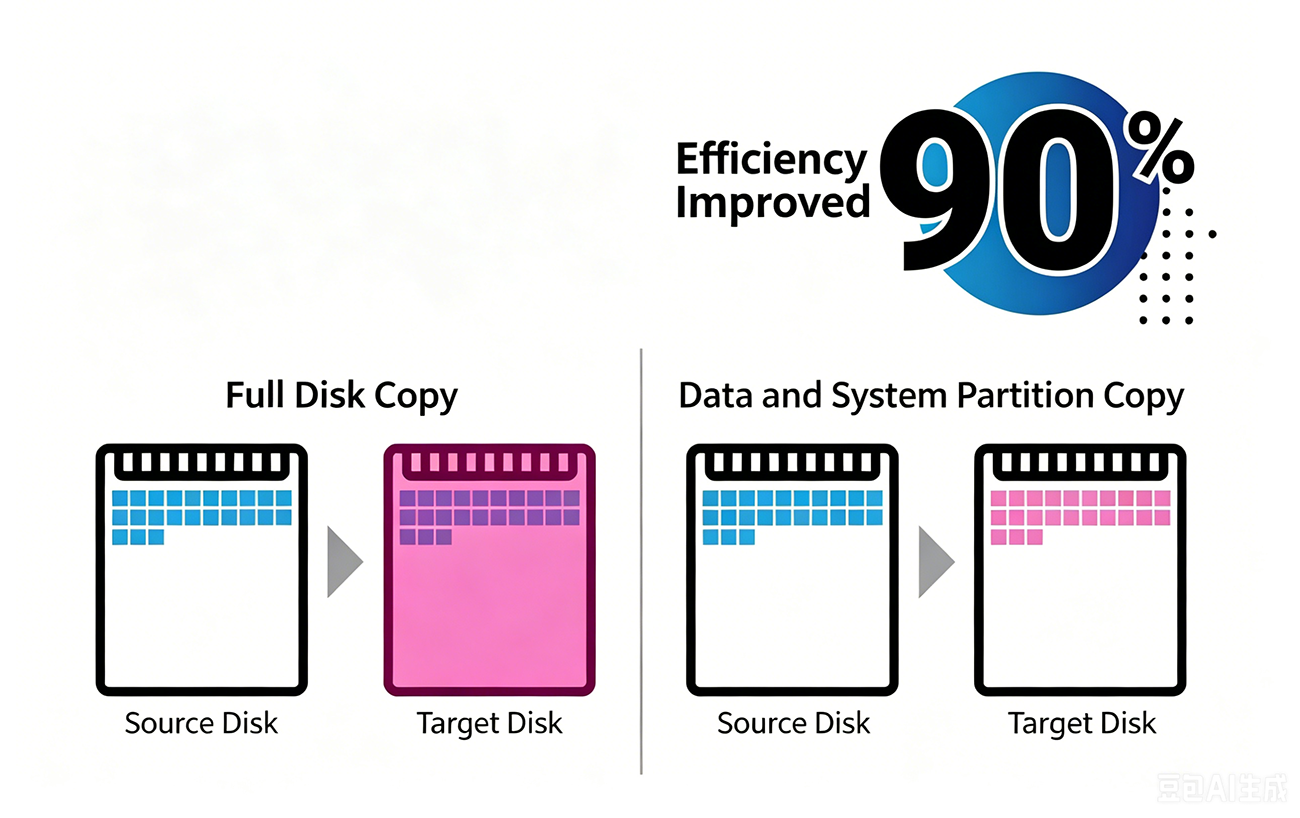
Select the cloning mode via the cloner’s buttons. The cloner automatically activates the system data area cloning mode. With an actual measured speed of 22GB/min, cloning the 35GB system image to a single drive takes only 90 seconds. Simultaneous deployment on 7 industrial computers is also completed in 90 seconds (compared to 210 minutes for the traditional method to deploy 7 units).
Step 3: Real-Time Verification and Abnormal Alert
After cloning is completed, the cloner automatically compares the CRC verification codes of the target drives and the master drive. If verification fails due to hard drive faults, the cloner immediately lights up a red light at the corresponding port to issue an alert. The operator can quickly replace the hard drive and restart cloning, preventing defective products from entering the next production process.
After introducing the JMEGA cloner, the enterprise went through a one-month operation and debugging period. The industrial computer OS deployment process achieved comprehensive optimization in terms of "efficiency, cost, and quality," with the following specific results:
1. Doubled Production Capacity
•Deployment Efficiency: The deployment time per industrial computer has been reduced from 30 minutes to 90 seconds. With only 1 operator, the daily production capacity can reach 320 units, exceeding the 300-unit target.
•Delivery Cycle: The order delivery cycle has been shortened accordingly, reaching an industry-leading level, and the customer repurchase rate has increased by 20%.
2. Sharp Cost Reduction and Significant Comprehensive Benefits
•Labor Costs: The number of operators has been reduced from 10 to 1, saving approximately 100,000 yuan in monthly labor costs.
•Rework Costs: The system deployment defect rate has dropped from 7.5% to 0.3%, and monthly rework costs have decreased from 30,000 yuan to 1,200 yuan, a reduction of 96%.
•Equipment Costs: Previously, 2 independent deployment lines were required; now, only 1 cloner plus 1 production line is needed. Workshop space occupancy has decreased by 60%, and equipment maintenance costs have been reduced by 40%.
3. Improved Compatibility and Simplified Production Processes
The PF-X800 supports both NVMe and NGFF dual interfaces, enabling "mixed-model production on a single line" for the 2 series of industrial computers. Operators no longer need to frequently switch equipment or adjust processes. The production model changeover time has been shortened from 30 minutes to 1 minute, and the response speed for multi-model orders has increased by 83%.
IV. Core Advantages: Why is the JMEGA Cloner Suitable for Industrial Computer Deployment Scenarios?
Compared with ordinary cloning devices on the market, the JMEGA cloner has three technical features that make it an "exclusive tool" for industrial computer system deployment:
1. High-Speed Cloning
The JMEGA PF-X600H adopts a customized high-speed control chip and supports direct PCIe channel connection. Its actual measured cloning speed reaches 22GB/min, which is 3 times that of ordinary USB 3.0 cloners (with a speed of approximately 8GB/min), easily handling large-capacity industrial computer system data of 30-50GB.
2. All-Channel Independent Architecture: No Speed Reduction in Parallel Operations
Ordinary cloners adopt a "shared bandwidth" design. When more than 4 target drives are connected, the speed decreases by 30%-50%. In contrast, each interface of the JMEGA cloner is an independent channel. Even when the PF-X800 is fully loaded with 7 target drives, the cloning speed for each drive remains 22GB/min, ensuring stable parallel deployment efficiency.
3. Industrial-Grade Reliability: Adaptable to Complex Workshop Environments
Industrial computer manufacturing workshops face issues such as dust and voltage fluctuations. The JMEGA cloner features a metal case for dust protection, supports 100-240V wide-voltage input, and has an operating temperature range of 0-45℃. It can operate stably continuously for 72 hours, with a Mean Time Between Failures (MTBF) of 50,000 hours, far higher than the industry average of 30,000 hours.
V. Case Insights: The Direction of the "Efficiency Revolution" in Industrial Computer Production
This case shows that industrial computer system deployment has transitioned from "labor-intensive" to "equipment-automated." When selecting a suitable cloning device, three core dimensions should be considered:
•Speed Matching Production Capacity Requirements: Calculate the required cloning speed based on the system capacity and daily production capacity (e.g., for a 35GB system and the target daily production capacity per unit, a cloning speed of at least 22GB/min is required).
•Compatibility Covering the Entire Product Line: Prioritize cloners that support multi-interfaces such as NVMe/NGFF to avoid repeated investment in multiple production lines.
•Verification Function Ensuring Quality: CRC verification, combining cloning with comparison, is the key to reducing the defect rate and achieving quality control.
By deeply adapting to industrial computer production scenarios, the JMEGA PCIe cloner not only resolves the efficiency bottlenecks of a single enterprise but also provides a standardized solution for the entire industrial computer industry to "reduce costs, increase efficiency, and improve quality." Currently, the enterprise has promoted the JMEGA cloner to its 3 production bases, and it is estimated that the annual cost savings will exceed 800,000 yuan. The shortened order delivery cycle has further consolidated its market position in the industrial automation field.
For industrial computer manufacturers still troubled by low system deployment efficiency, the "free prototype trial + customized solution design" service provided by JMEGA can help enterprises verify the value of the equipment with zero risk, quickly break through production capacity bottlenecks, and seize a competitive advantage in the wave of Industry 4.0.